Friday, 21 September 2012

Agfa ISO Rapid and Ilford Cine Film

Some results with a very expired 1961 Ilford Cine Film shot with my Agfa ISO Rapid camera. The film is loaded by hand in total darkness inside the Rapid Cartridge system as this type of films aren't available in the market anymore.


This film is isn't sharp at all and it has a much thicker layer of anti-halation. Note the difference on the  picture below, it was taken using the Fuji Neopan Across 100.


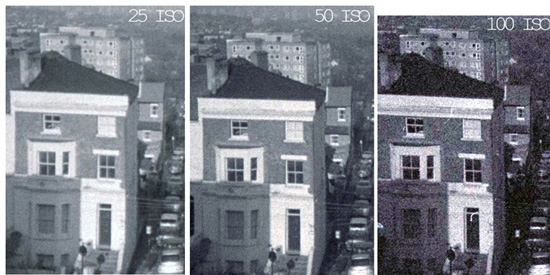
I've previously tested the Ilford Cine film using  three  different ISO rates in order to show me what would be the best setting to shoot since the film has no indication of film speed on the tin. 

I shot the same picture using 25, 50 and 100 ISO and  the results can be seen on the  slices I zoomed in of each frame. I'm using the 50 ISO as a starting point whenever I'm using this film.


Tuesday, 28 August 2012

Hand-Coloured Photographs – My Family Album


I have been going through my mum's photobox for the first time since I left London. I've decided to digitalize the very old and the most important ones to start just in case they get damaged or lost but my plan is to add more with time. I intend to post these copies onto a website and make them “safe” somewhere like flickr, photobucket etc. Going through this box of photographs is something I've been doing since my childhood and it will be sad if one day they disapear.

So while going through the box I've found some copies where the images were hand-tinted. I had completely forgotten about these photos after all these years... and this is a photographic technique I've learnt while living in London which I really like. I've been buying old photographs and hand-colouring them for quite sometime so to me it was a kind of surprise to find few examples within my own family album.

My mum's photo of her First Communion...


My father and my mum below ...


... and this is me.
The most interesting one is my grandparent's portrait. This photo is about 8x10 and is heavily coloured, a style very known in Brazil through Mestre Júlio Santos.


Wednesday, 11 July 2012

Found Film

Last year I bought a Kodak Brownie Cresta and it was a nice surprise to find a half-exposed film inside, I processed the roll and all pictures came out nicely. Probably taken in the late 50's, it's quite amazing that after all these years we are still able to get very quality results from such old film. 

So a friend of mine while browsing on this blog really liked the "Kodak Cresta Kid" and asked me to use the image on the cover of his band's debut album Cyclopian. I love the result and the photoshop mirror effect created a sort of "monster" that really suits the band sound's style.

More about Cyclopian go to cyclopian.bandcamp.com

Monday, 25 June 2012

Olympus - XA2

I just got the negatives back from the lab in time to do this post before moving back to Brazil. I've always heard about how good the Olympus XA series cameras are so I decided to get one and try for myself. 

There are a few similarities between the Lomo LC-A and the Olympus XA series, they both are great pocket cameras and have amazing lens able to produce really sharp images.

What differs the Lomo from the XA it's mostly the price, you can pick up an Olympus on ebay for a real bargain comparing to the overpriced Lomo available on the market. Other than that they're both great automatic cameras to leave on you bag at all time ready to be used.

The Olympus gave me perfect results with no blurry edges or vignetting, a great simple camera perfect for street photography.

A photographs were taken using Fuji Superia 100 ISO


Monday, 28 May 2012

Ilford Glass Plates

I got hold of a few boxes of Ilford Glass Dry Plates in very good condition, they have no expire date but according to the Early Photography website it dates  back 1950's.

I've run a test to find out how sensitive the plates still were after all this years and I had a good result at 20 seconds f/4.6 in sunlight.

They came out slightly over exposured, the sun was probably stronger in the Park but it was not difficult to adjust the levels in Photoshop. Considering I didn't have much image recorded on the first test plate I'm quite pleased with the final results.


I've used my Combi Plan tank to process and because the plates are smaller than the 4x5 sheet film, I could use 600ml of chemicals instead the usual full tank. I used a solution of 1:50 Rodinal / 15 minutes normal agitation.

 The shots were taken using my Voigtlander Avus plate camera.

Tuesday, 1 May 2012

My very first Wet Plate Collodion Photographs

A very especial post for me as I had been meaning to try this for a few years... this is my first experience with wet collodion photograph!

After spending a wonderful weekend in Scotland learning this technique with Carl Radford it's needless to say how much I enjoyed the whole experience!


Learning this process it's almost like a survival guide to me... with prices of film increasing significantly,  the chances  that one day film will not exist or will be really hard to get are becoming higher and higher so I like the idea of producing my very own light sensitive emulsion from scratch.


Frederick Scott Archer was the inventor of the wet collodion photograph process which was introduced in 1850. Archer died on May 1st 1857 without even having his invention patented, he was buried at Kensal Green Cemetery in an unmarked grave.

My desire for experimenting with this process started exactly two years ago, on May the 1st 2010 in the same  Kensal Green Cemetery in London where Archer it's been buried. I was fortunate to attend an event in the honour of Frederick Archer where Carl, Quinn and a group of wet plate collodion enthusiasts around the world decided to give him the deserved recognition for his invention. On that day during a ceremony a headstone in his honour was unveiled and a tribute was deservedly paid, there were also exhibitions and collodion demonstrations.


Wednesday, 18 April 2012

Generic Films

Offer me one of these films years ago and I would laugh or even get insulted.  Well... the digital revolution has made some significant changes in many aspects and in photography is no different.

As more commonly known brands such as Fuji and Ilford are costing way too much if you want to experiment, these kind of  films are increasingly becoming part of my life.

It is true that some of them are made by divisions of big companies, like the Costco's Kirkland by Agfa, but in some cases it's hard to know exactly where its origins lies and if it's actually going to produce something.


A plastic camera is not just for Christmas...

I just took a little gamble today in my local charity shop and bought ten disposable cameras at £0.50 each. They are 24 exposures 400 ISO  and it will expire in August 2012, a good option at least for my half-frame camera.

These cameras are reloadable so I'm assuming the lab would take the film out to be processed, and then send them back with a fresh one loaded.


Because of that all I had to do was open the back door to take the film out. In some disposable cameras the whole film is out of the cartridge and it wounds back inside as you use, to take it out you'll then have to use the camera in completely darkness in order to load the film back into the cartridges.

What's more interesting is the fact that the cartridges are from Kodak with some generic label covering...

I'm looking foward to try them... they might do ok to use as a redscale or in my pinhole cameras.

Friday, 23 March 2012

Fujica Drive Half-Frame Camera

I must admit I didn't really care much about half-frames cameras before. Theoretically, they're meant to deliver low quality pictures due to the fact that you're exposing half of the size of a 35mm film frame. On the plus side though, this means that a 36 exposure film will give you 72 frames, something that puzzled me when I was a child... I remember my uncle saying that this camera would “transform” the film from 36 to 72 exposures...

The Fujica Drive was manufactured in the mid 60's by the Japanese company Fuji, it has auto mode which works with a sellenium meter and fully manual control with speeds of 1/30 – 1/60 – 1/125 -1/300 and B.  The focus is achieved by rotating the front lens and is marked in feet, it also have marked in red “P” for portraits, “G” for groups and the infinity symbol for a quicker reference. 

A tripod mount and cable release socket is available as well the cold-shoe for dedicated flash and self-timer... quite a lot features I have to say for a camera that would supposedly deliver low quality pictures. 

But what's really cool about this camera is the battery less clockwork motor-drive feature, just turn the big dial under the body until it locks and you'll have 18 frames  ready to be exposed without having to wind the camera, a very useful feature even nowadays for shooting subjects in action.  

Before actually holding one in my hands I had low expectations about the camera, instead I was quite surprised how solid and well made they're built.

My experience when using the camera changed my opinion completely about the half-frame format and depending on the results you are after, some cameras can definitely deliver good quality results. The images below were taken with the manual setting, the sellenium meter is not working as it's already expected for such an old camera.

The film is the Agfa APX 100 processed on Rodinal 1+50 solution/13 minutes developing time.


First thing I noticed while using the camera is that it changed the way I normally compose my pictures. Because the viewfinder is in the vertical position I had almost all of my pictures taken on this format, something that I hardly ever do with other cameras.

I also have to increase the scanner's DPI setting considerably if I want a  larger and noiseless result on my computer screen.

Some people find annoying the fact that a 36 exposures film seems to last forever in the camera and for that reason they recommend using a 12 or 24 exposures. I personally think that a 36 film roll gives me the opportunity to bracket a bit more without feeling guilty of wasting too much film.


Friday, 9 March 2012

The Carnival is over

For many years, whenever I go back to Sao Paulo I always drive by few sites where they keep discarded carnival floats,  I've always thought that one day I could stop by... walk around and take some photographs.


So last year I finally decided to do...  and there I met Jose Carlos (the guy on the picture), which after chatting for a few minutes he kindly gave me permission to photograph the area. He explained me that he looks after the site and work as well on recycling the puppets' structure to be used on the following carnival, in fact he was working on this year's one that it's gone.
I had my Debonair Diana Clone loaded with some Fuji Astia and my Holga with some Fuji Neopan, unfortunately the heat melt the sponge inside my Holga and I had all the films really fat, in addtion to that I didn't compensate enough for the red filter I was using and as a result quite few shots came underexposed with too much light leak.